






The TENS unit, EMS device, and electrotherapy machine function as medical instruments which utilize electrical currents to provide non-invasive treatment for pain relief, muscle stimulation, and tissue healing. The devices function as a drug-free treatment solution which healthcare providers use to treat both severe and long-lasting medical conditions that affect approximately 30 million patients in the United States.
What Are TENS, EMS & Electrotherapy Devices?
What is electrotherapy?
Electrotherapy represents a treatment approach which uses electrical currents to produce therapeutic effects on human muscle and nerve functions. TENS (Transcutaneous Electrical Nerve Stimulation) targets pain pathways, while EMS (also called NMES: Neuromuscular Electrical Stimulation) triggers muscle contractions directly. The clinical-grade systems operate across multiple therapeutic systems which include ultrasound and shortwave diathermy and interferential current and combination systems.
What are these devices used for?
These devices help control persistent pain while helping patients restore their muscles after surgery and preventing muscle wasting in patients who need to stay still and they help reduce muscle spasms and they enhance blood flow in specific areas and they speed up the process of soft tissue recovery. The devices find common application in athletic training and sports recovery because they help athletes improve their performance while reducing delayed onset muscle soreness.
Who should use TENS, EMS & electrotherapy products?
The products suit professional use by physical therapists and occupational therapists and sports medicine specialists and chiropractors and home health aides and caregivers who treat home-based pain patients and elderly people who experience ongoing musculoskeletal pain and post-surgical patients and people who have neurological disorders that cause muscle tone changes and athletes who attend predefined recovery programs.
Types of TENS, EMS & Electrotherapy Products
Portable TENS Units for Home & Clinical Use
Portable TENS units deliver low-voltage electrical pulses through surface electrodes to interrupt pain signal transmission via the gate control mechanism and stimulate endorphin release. The iReliev ET-1313 TENS Unit Pain Relief System provides straightforward, user-friendly operation for individuals managing back pain, arthritis, sciatica, or neuropathic pain at home. The iReliev ET-7070 combines TENS and EMS in a single portable system which delivers affordable personal therapy capabilities to users at its price point.
Rechargeable TENS + EMS Combination Systems
The iReliev ET-8080-C Premium Rechargeable TENS EMS System provides multiple pre-set modes which operate on a rechargeable battery. The iReliev HD-5050 Therapeutic Wearable TENS EMS System provides a hands-free design which enables users to receive treatment while performing their everyday tasks.
Wireless Muscle Stimulators
The iReliev IR-PRO-1000-2 PRO Wireless Muscle Stimulator integrates both TENS and EMS modes in a cable-free design. The iReliev IR-PRO-500 SPORT Muscle Stimulator includes an explosive strength training mode which supports athletes who need to develop their neuromuscular abilities while protecting themselves from injuries and recovering from them.
Clinical Neuromuscular Stimulators
The Mettler ME 206 Sys Stim 206 and ME 228 Sys*Stim 228 dual-channel electrical neuromuscular stimulators function as medical devices which physical therapy clinics use to treat motor points and help stroke and orthopedic surgical patients recover their muscle control and treat edema. The Amrex HV752 SynchroPulse Hi-Volt Dual Channel Muscle Stimulator offers high-voltage galvanic stimulation which medical professionals use for deep tissue applications that include wound healing support and acute edema reduction.
Therapeutic Ultrasound & Combination Units
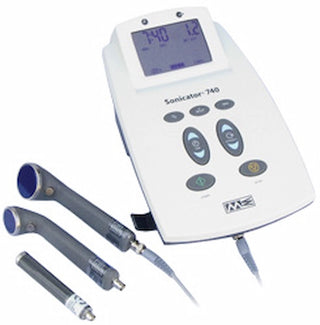
The Mettler ME 740 Sonicator 740 delivers professional therapeutic ultrasound with multiple applicator sizes. Clinics that need to use both electrical stimulation and ultrasound together should select the Mettler ME 921 and ME 941 Sonicator Plus series which provides 2-channel and 4-channel touchscreen combination systems. The ME 921C and ME 941C variants include mobile carts. The Amrex US752 SynchroSonic and US54 SynchroSonic provide simultaneous ultrasound together with high-voltage or low-voltage AC stimulation for treating complicated musculoskeletal conditions.
Shortwave Diathermy & Advanced Modalities
The Richmar DQSWD2 TheraTouch DX2 Shortwave Diathermy Unit delivers deep electromagnetic heating to joints, muscles, and connective tissue for chronic arthritis, capsulitis, and subacute ligament injuries. The Mettler ME 695 Auto Wave Radial Pressure Pulse Therapy Device treats calcific tendinopathy and plantar fasciitis. The Mettler MR CUBE Monitored Rehab Device uses real-time biofeedback to provide electrotherapy monitoring for prescribed neuromuscular rehabilitation programs while including a laptop computer.
Accessories & Consumables
Maintaining electrode adhesion and device performance requires regular replenishment. Available accessories include:
- iReliev Wired Pad Refill Kits: small (CM5050-4-S), large & small (ET-8484-S), SPORT pads (IR-PRO-504)
- Spectra 360 Conductive Gel (ET-3408, 250g tube) for optimal current conductivity
- TENS Prep Wipes (ET-3500) for skin preparation before electrode placement
- Extra-Long TENS Lead Wires (ET-4848) and Device Clip Holsters (ET-4949)
- Hard Protective Carry Cases (ET-5089, ET-8710, ET-1370) for portable unit storage and transport
Where Are TENS, EMS & Electrotherapy Devices Used?
- Physical therapy clinics: The main elements that guide outpatient rehabilitation for orthopedic and neurological and sports injury cases consist of three types of equipment which include multi-channel clinical neuromuscular stimulators and therapeutic ultrasound and combination units.
- Hospitals and inpatient rehab units: The medical-grade EMS equipment together with high-volt stimulation devices functions as the essential framework which supports post-surgical muscle re-education and wound care treatment and edema control programs.
- Nursing homes and long-term care facilities: Residents who experience chronic pain from arthritis and peripheral neuropathy and musculoskeletal conditions can access pain relief through portable TENS machines and EMS devices which come in both portable and tabletop formats.
- Home care: People who suffer from back pain or fibromyalgia or sciatica or who need to rehabilitate after surgery use portable rechargeable devices and wearable technology to maintain their therapy between doctor visits.
- Sports medicine and athletic training: Athletes at all levels of competition use wireless muscle stimulators together with combination TENS/EMS devices to support their recovery process and strength development and their injury prevention efforts.
How to Choose the Right Electrotherapy Device
Clinical vs. Personal Use
The assessment should decide if the device will be used in clinical environments with professional monitoring or by people in their personal residences. Clinical units provide additional waveform selections together with increased output specifications and their ability to support multiple channels. Personal units are designed to provide simple operation together with compact design and built-in operational settings.
Therapy Type Required
The assessment should determine which of the following functions serves as the main treatment goal, which includes pain relief through TENS, muscle stimulation through EMS/NMES, deep tissue heating through diathermy or ultrasound, or a combination of these methods. Many patients benefit from combination devices that address multiple goals in a single therapy session.
Number of Channels
Single-channel units treat one area at a time. Dual-channel units can address two sites concurrently. Four-channel units, which include the Mettler ME 941 Sonicator Plus, enable facilities to treat more patients through their expanded treatment capabilities.
Portability and Power Source
Rechargeable portable units are essential for home care patients and mobile therapists. Clinic devices use standard AC power to operate while they focus on delivering accurate output instead of being easy to move.
Brand and Clinical Evidence
The collection includes iReliev Mettler Electronics Amrex and Richmar/Whitehall as brands which healthcare professionals in the United States commonly use while their products meet both scientific standards and official regulations.
TENS Units vs. EMS Muscle Stimulators. Key Differences
| Feature | TENS Units | EMS / NMES Devices |
|---|---|---|
| Primary Target | Sensory nerves (pain pathways) | Motor nerves (muscle fibers) |
| Main Benefit | Pain relief, endorphin release | Muscle contraction, re-education |
| Best Use Case | Chronic pain, arthritis, neuropathy | Post-surgical atrophy, strength training |
| Typical Feeling | Tingling, buzzing sensation | Visible muscle twitch or contraction |
| Prescription Required | OTC available for personal units | Clinical-grade units require clinician use |
Key Features of TENS, EMS & Electrotherapy Products
- Pre-programmed clinical modes for specific anatomical areas and conditions
- Rechargeable lithium battery operation for extended portable use
- Dual-channel and four-channel output for simultaneous multi-site treatment
- Touchscreen digital controls for precise parameter adjustment (Mettler ME 921 / ME 941)
- Wireless electrode technology for unrestricted patient movement during therapy
- Compatible accessory ecosystems: replacement pads, lead wires, conductive gel, carry cases
Frequently Asked Questions
What is the difference between TENS and EMS?
TENS (Transcutaneous Electrical Nerve Stimulation) targets sensory nerve fibers to interrupt pain signals and stimulate endorphin release, primarily for pain management. EMS targets motor nerve fibers to create visible muscle contractions which help users to develop muscle strength and improve blood flow. Many devices in this collection combine both functions in a single device.
Are these devices safe for home use?
Portable TENS and EMS devices from brands such as iReliev are intended for home use and can be purchased by people who need to treat common pain conditions without needing a medical prescription. Clinical-grade systems which include therapeutic ultrasound and shortwave diathermy units require operation by licensed clinicians. Users should always seek medical advice before starting electrotherapy for their first time treatment of an unidentified health issue.
How long should a TENS session last?
Most portable TENS sessions last from 20 to 30 minutes for each treatment area and patients can use them throughout the day to achieve pain relief. Clinical protocols require different treatments because various medical conditions demand specific devices which doctors create according to their treatment methods.
Can electrotherapy be used after surgery?
Yes. Doctors use post-surgical neuromuscular electrical stimulation (NMES) to help patients recover from surgery because it helps them build strength and control their muscles while reducing post-operative swelling. Physical therapists and physicians should direct use of the equipment because they need to consider the specific medical procedure and patient healing stage and individual patient characteristics.
Do TENS electrodes need to be replaced regularly?
Yes. Electrode pads lose their ability to stick and transmit electrical signals after some time has passed. Most iReliev pads have a lifespan of 20 to 30 uses which requires users to replace them. The use of new pads which stick properly to the skin allows for constant electrical flow while stopping skin problems that arise from irregular contact points.