


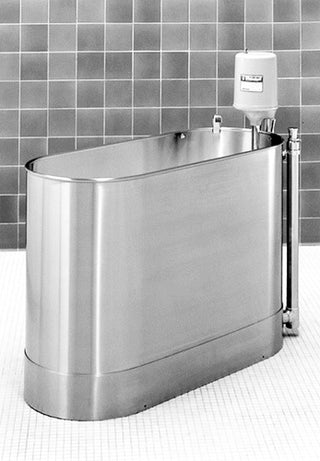
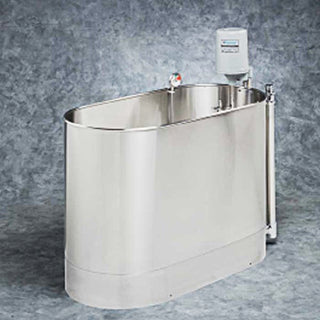
Medical Hydrotherapy Whirlpool Tubs for Rehabilitation and Wound Care
Hydrotherapy whirlpool tubs function as professional-grade therapeutic equipment that uses warm water immersion together with turbine-driven water agitation to provide pain relief, enhanced blood circulation, tissue healing, and functional rehabilitation assistance. Medical whirlpool tubs serve as one of the most established and clinically validated treatment methods used in musculoskeletal rehabilitation and wound care treatment in physical therapy clinics, sports medicine facilities, hospitals, nursing homes, and burn treatment centers throughout the United States.
What Are Medical Hydrotherapy Whirlpool Tubs?
What is hydrotherapy?
Medical hydrotherapy uses water that technicians control to treat various medical conditions, including acute and chronic musculoskeletal disorders, sports injuries, post-surgical wounds, burns, and movement restrictions. The design of clinical whirlpool tubs incorporates seamless stainless steel construction which enables them to deliver adjustable turbine output and maintain precise temperature monitoring while withstanding intensive clinical usage.
What are hydrotherapy whirlpool tubs used for?
The units provide pain relief through warm water immersion while reducing muscle spasms and increasing joint flexibility. They support wound healing through a controlled debridement process, assist in post-surgical edema management, provide treatment for burn wounds, and enable patients to exercise in water, which reduces the effective body weight on injured or arthritic joints.
Who should use hydrotherapy whirlpool equipment?
The products are created to meet the needs of physical therapy clinics, hospital physical medicine and rehabilitation departments, athletic training rooms, sports medicine facilities, orthopedic outpatient centers, burn treatment units, nursing homes, and assisted living facilities that provide therapeutic programs to residents with chronic musculoskeletal conditions.
Types of Hydrotherapy Whirlpool Tubs
Extremity Whirlpools
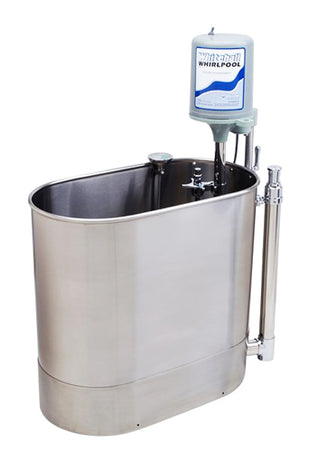
Extremity whirlpools function as small tanks which enable medical professionals to provide treatment for hand and foot areas, including both hands and wrists and both feet, ankles, and lower legs. The Whitehall WHE-27-S (27-gallon stationary) provides a controlled turbine-driven therapeutic environment for conditions such as distal fractures, peripheral neuropathy, plantar fasciitis, carpal tunnel syndrome, and post-surgical edema of the hand or foot. The compact design of these devices enables their use in medical facilities that have restricted space for treatment.
HydroLift Whirlpool Systems
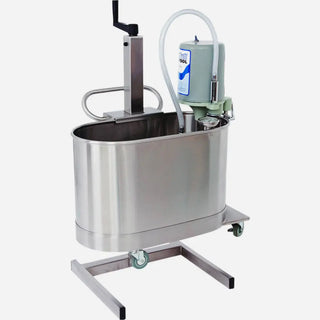
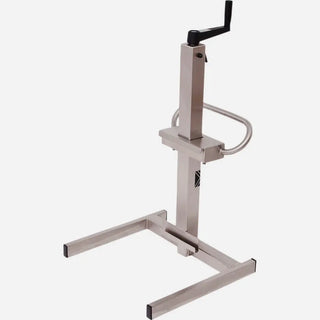
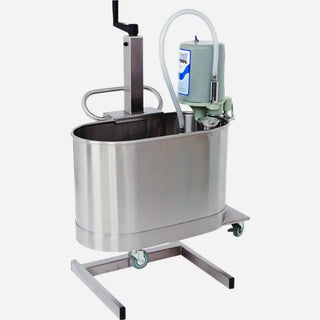
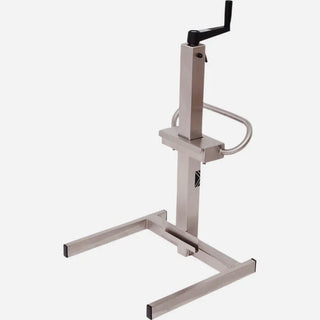
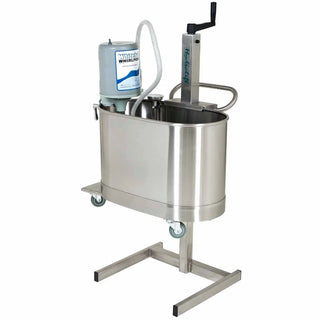
The Whitehall HydroLift series combines extremity whirlpool functionality with an adjustable hydraulic lift mechanism that raises and lowers the tank to accommodate clinicians of varying heights and patients with limited mobility. The units, which come in three different configurations, include a 10-gallon mobile version (HYL-10-M), a 15-gallon version (HYL-15-M), and a 22-gallon mobile version (HYL-22-M), which helps decrease therapist strain in clinical settings that handle a high volume of patients.
Sports Whirlpools
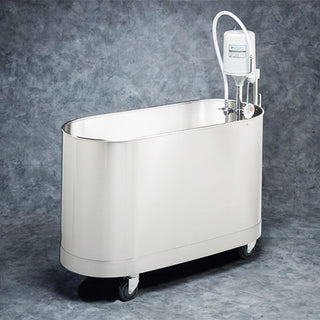
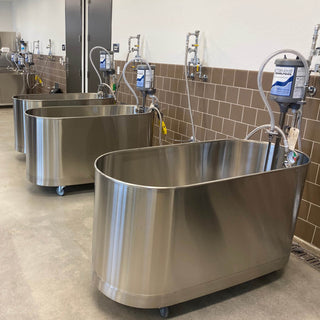
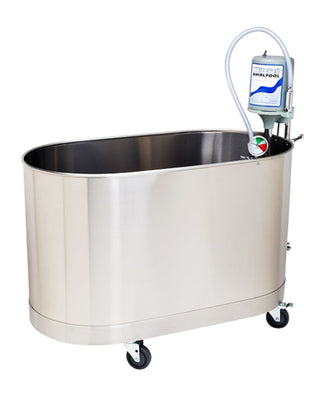
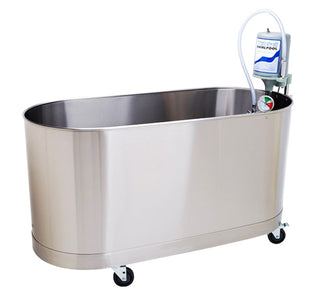
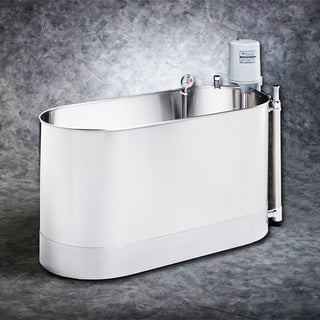
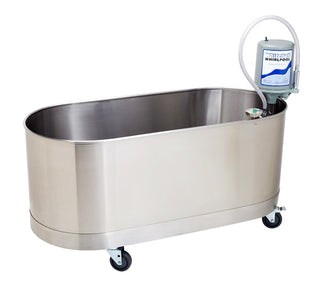
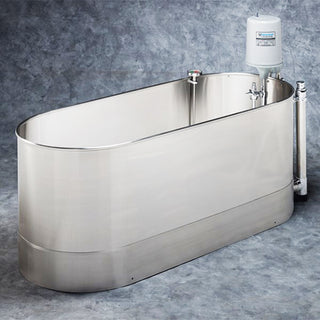
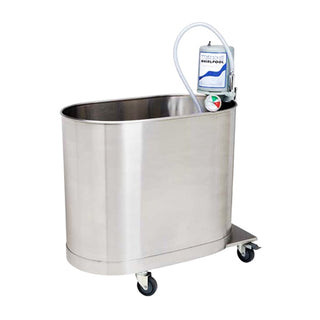
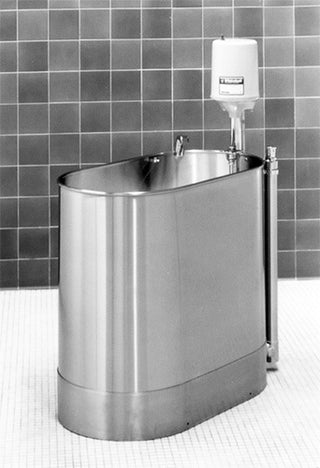
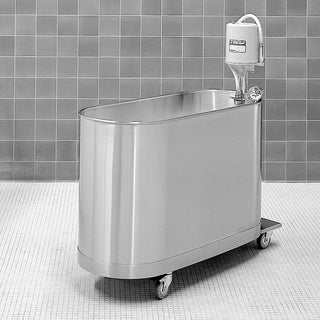
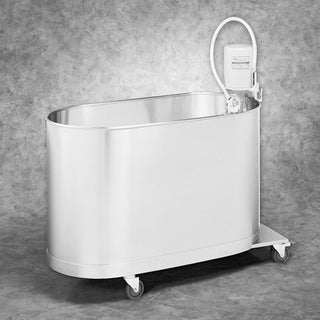
The sports whirlpool tank functions as an athletic recovery system which enables athletes to submerge their entire lower body from knee to hip and lumbar area for treatment after sustaining injuries or undergoing surgical procedures. Whitehall Sports offers five models: WHS-85-M (85-gallon mobile), WHS-90-M (90-gallon mobile), WHS-90-S (90-gallon stationary), WHS-110-M (110-gallon mobile), and WHS-110-S (110-gallon stationary). These tanks serve as essential equipment for professional athletic training centers, collegiate training rooms, and orthopedic physical therapy centers treating active patients.
Hi-Boy Whirlpool Tubs
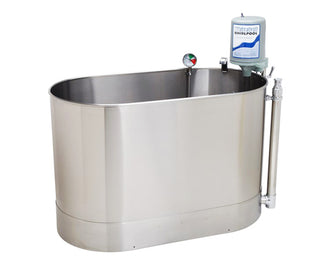
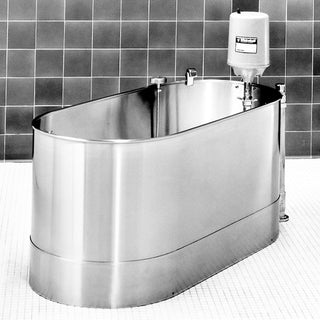
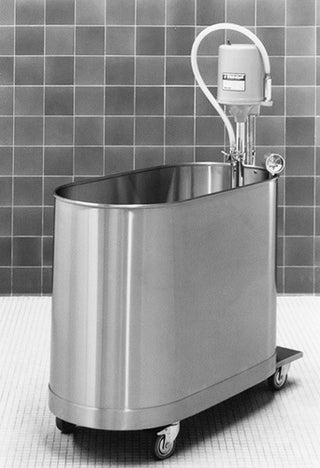
Hi-Boy tanks enable patients to sit upright while their waist and lower body submerge into the water without needing to use a low-profile unit. The Whitehall Hi-Boy series offers capacities from 60 gallons (WHH-60-M mobile, WHH-60-S stationary) through 75, 90, and 105-gallon models. The elevated design works effectively for treating patients with knee, hip, or back problems who cannot access regular seating because of their condition.
Lo-Boy Whirlpool Tubs
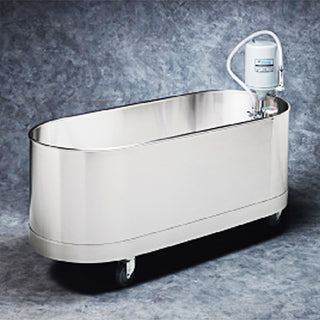
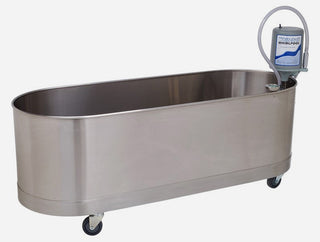
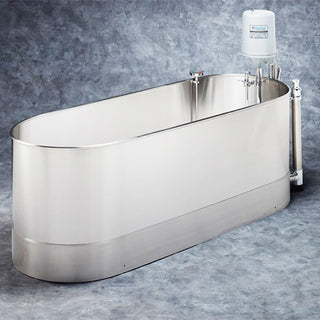
Lo-Boy tanks have a reduced height which enables patients to enter the tank more easily from either a seated position or while transferring, making the tanks ideal for elderly people, surgical recovery patients, and those who have severe difficulty moving. Lo-Boy Whitehall models include the WHL-75-M (75-gallon mobile), WHL-75-S (stationary), WHL-90-M/S (90-gallon), and WHL-105-M/S (105-gallon). The largest Lo-Boy units provide full lower body immersion capacity suited to comprehensive rehabilitation protocols in hospital and long-term care settings.
Where Are Medical Whirlpool Tubs Used?
Physical therapy outpatient clinics: Orthopedic physical therapy clinics use sports whirlpools together with Hi-Boy tanks to provide treatment for post-surgical knee patients, rotator cuff repair patients, and ankle fracture patients who need warm water immersion to perform initial range-of-motion exercises and alleviate pain.
Hospital PM&R departments: Inpatient rehabilitation units use large-capacity whirlpools to support post-stroke motor recovery, post-amputation residual limb conditioning, and wound preparation for patients who have pressure injuries or vascular ulcerations.
Athletic training rooms: Collegiate and professional team facilities use sports whirlpools, including 85 to 110-gallon mobile models, to treat acute injuries and conduct scheduled recovery sessions.
Nursing homes and long-term care facilities: These facilities use extremity whirlpools together with Lo-Boy tanks to provide therapeutic programs for residents who have diabetic foot complications, chronic arthritis, peripheral vascular disease, and post-fracture rehabilitation needs.
Burn treatment centers: Burn treatment centers use controlled turbine agitation in stainless steel tanks to support wound debridement, necrotic tissue removal, and infection management during burn wound care protocols.
How to Choose the Right Hydrotherapy Whirlpool Tub
Treatment Area and Patient Population
Clinics that treat patients with conditions affecting their distal extremities should use extremity whirlpools and HydroLift units for their treatment needs. Treatment of lower-body conditions calls for Sports tanks, Hi-Boy, or Lo-Boy tank systems. Elderly patients who need assistance with mobility should use HydroLift models or Lo-Boy systems because these designs allow for easier and safer entry to treatment areas.
Tank Capacity
The collection includes items with capacities that start at 10 gallons for HydroLift extremity units and extend up to 110 gallons for Sports Whirlpool units. Treatment area capacity should be decided according to the body part being treated and the weight range of patients who will be treated. Larger tanks provide more operational options but need extra space to operate and take more time to fill and empty.
Mobile vs. Stationary Configuration
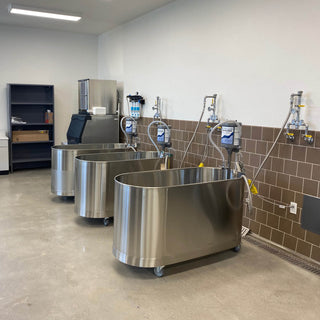
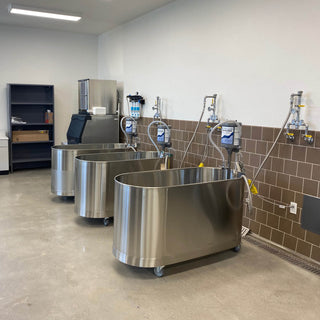
Mobile units use heavy-duty casters to move between treatment areas, which benefits facilities that use shared therapy spaces. Stationary systems connect to floor drains through plumbing to deliver permanent hydrotherapy service for dedicated treatment areas.
Construction and Infection Control Standards
The entire collection of units uses seamless stainless steel construction, which helps prevent bacterial biofilm accumulation in joints that would otherwise compromise healthcare facility infection control standards. Stainless steel maintains its integrity through repeated chemical disinfecting processes without surface damage.
Turbine Control and Clinical Customization
The adjustable turbine assembly system enables clinicians to control three water agitation parameters: direction, intensity, and aeration level. The system also lets clinicians select different warmth levels, providing gentler water treatment for patients with arthritis conditions.
Hi-Boy vs. Lo-Boy Whirlpool Tubs: Which Is Right for Your Clinic?
| Feature | Hi-Boy Whirlpool | Lo-Boy Whirlpool |
| Tank Height | Elevated | Low-profile |
| Patient Entry | Step up and sit | Transfer from chair or bench |
| Best Patient Population | Ambulatory, orthopedic patients | Elderly, post-surgical, limited mobility |
| Immersion Area | Knee to lumbar | Lower extremity and hip |
| Available Capacities | 60–105 gallons | 75–105 gallons |
| Configuration Options | Mobile and stationary | Mobile and stationary |
Key Features of Medical Hydrotherapy Whirlpool Tubs
- Seamless stainless steel construction for superior infection control and long-term durability
- Adjustable turbine assemblies with directional aeration for customized treatment intensity
- Built-in dual-scale thermometers for continuous temperature monitoring during therapy
- Heavy-duty caster systems on mobile models for safe repositioning within the facility
- Rapid drainage systems to support high patient turnover in busy clinical environments
- HydroLift hydraulic elevation mechanism for ergonomic patient setup and clinician back protection
Frequently Asked Questions (FAQ)
Q: What water temperature is used in medical hydrotherapy?
A: Water temperature for therapeutic whirlpool treatment typically ranges from 98°F to 110°F (36.7°C to 43.3°C) depending on the clinical indication, patient age, and cardiovascular status. Patients with acute inflammatory conditions or vascular function issues require treatment at lower temperatures. All tanks in this collection include built-in thermometers to monitor temperature accurately throughout treatment.
Q: How often should patients receive whirlpool therapy?
A: The treating physical therapist or physician determines treatment frequency according to the patient's diagnosis, healing progress, and rehabilitation schedule. Acute conditions often require daily treatment, whereas chronic conditions need two to three weekly sessions. Wound care protocols establish treatment frequency according to the current wound condition and the patient's risk of developing infection.
Q: Are these whirlpool tubs appropriate for wound care?
A: Yes, clinical whirlpool tanks made from stainless steel are used in wound care procedures because they support gentle debridement, bacterial load reduction, and improved tissue circulation for patients with damaged skin. Facilities need to implement strict infection control procedures, including proper disinfection methods between patient treatments, managed by infection prevention specialists and wound care registered nurses.
Q: What is the difference between a stationary and a mobile whirlpool tank?
A: Stationary tanks are permanently installed in dedicated hydrotherapy rooms and connect directly to water supply lines and floor drains. Mobile tanks are built on casters so staff can move them anywhere in the treatment area, using portable fill and drain hoses.
Q: Can these units be used for sports recovery as well as medical rehabilitation?
A: Yes, Sports Whirlpool models, particularly the Whitehall WHS-85-M, WHS-90-M, WHS-90-S, WHS-110-M, and WHS-110-S, are widely used in both sports medicine and clinical rehabilitation. High-intensity exercise training benefits from warm water immersion, since it supports parasympathetic recovery, decreases delayed onset muscle soreness, and enables movement with reduced weight-bearing.