





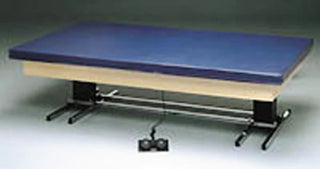


There is a kind of rehabilitation work that just cannot be done on a regular treatment table. Neuro-rehab, pediatric therapy, bariatric exercise programming, developmental activities, balance-and-coordination training, floor transfer practice, Bobath and NDT techniques, and low-level functional movement patterns all need a surface that is wide enough so the whole body of the patient can be positioned comfortably. It also has to be low enough for safe access at floor level, and strong enough not just for the patient but also so the therapist can work side by side right on top of it, without it wobbling or feeling weak. That surface is the therapy mat table, and honestly no professional rehab space is fully ready without one.
At MediDepot, our Mat Tables and Platforms collection brings together the electric hi-lo, the fixed-height wood, and the bariatric mat platform options that rehabilitation departments, pediatric therapy clinics, neurological rehab centers, and sports medicine facilities all over America rely on to give care that is safe, effective, and clinically complete. From the power-adjustable Clinton Industries 253 Hi-Lo Mat Platform to the heavy-duty triple-bolted fixed-height platforms from Pivotal Health Solutions, each mat table in our lineup is made to handle the particular realities of professional therapeutic practice.
Who Uses Therapy Mat Tables and Platforms?
Therapy mat tables take up an important, non-negotiable spot in the equipment lineups of lots of different clinical professionals and practice settings. The way they sit close to the floor, the amount of usable surface area, and the overall build strength all add up, making them the go-to treatment surface for many types of care.
- Physical Therapists, especially those focusing on neurological rehabilitation, often rely on these mat tables. They treat stroke survivors, traumatic brain injury patients, people living with Parkinson's disease, spinal cord injury patients, and individuals with multiple sclerosis. These groups often need wide, lower treatment areas for rolling, crawling, shifting weight, improving sitting balance, and floor-to-stand transfer practice. A standard treatment table usually cannot safely provide the same kind of space or access.
- Pediatric Physical Therapists and Occupational Therapists who work with infants, toddlers, and school-age children. For them, generous floor-level space matters a lot. It supports developmental motion exploration, sensory integration work, neurodevelopmental treatment, NDT, Bobath technique use, plus play-based therapeutic exercise. The surface becomes part of how the whole session flows.
- Bariatric Rehabilitation Specialists and Physical Therapists who treat patients with high body mass, requiring transfer assistance, supported exercise, and manual therapeutic intervention on broad, reinforced surfaces that can safely accommodate both the patient's weight and the forces generated during hands-on clinical work.
- Hospital and Inpatient Rehabilitation Department Directors equipping physical and occupational therapy gyms where a wide array of patient presentations, including post-surgical orthopedic, neurological, pulmonary, and cardiac populations, all benefit from low-to-ground, wide-surface exercise and rehabilitation platforms.
- Occupational Therapists providing activities of daily living (ADL) retraining, rehabilitation focused on the upper extremity, sensory processing intervention, and functional transfer coaching for patients whose treatment outcomes include floor-level mobility, low-surface transitions, and supported posture control.
- Sports Medicine Professionals and Athletic Trainers who use mat platforms for ground-based functional training, core stability exercise, foam rolling and soft tissue work, agility drills, and athlete rehabilitation progressions that call for a dedicated, low, firm, wide training surface.
- Developmental and School-Based Therapists who offer sensory integration therapy plus gross motor development and functional movement programs for kids on the autism spectrum, with developmental delays, cerebral palsy, and other related conditions, all needing roomy, safe floor-level play and therapy surfaces.
- Skilled Nursing Facility and Long-Term Care Rehab Directors who outfit therapy gyms with durable, high-capacity mat platforms that can support the whole patient base, including complex bariatric residents, post-stroke patients, and people with advanced neuromuscular conditions.
Electric Hi-Lo Mat Platforms: The Clinical Gold Standard for Patient Safety and Therapist Ergonomics
The ability to electrically raise and lower a mat platform is not really a "nice-to-have" add-on; it is a core patient safety need and a therapist ergonomics requirement for basically any clinical setting where patients have limited mobility, need transfer help, or have weight-bearing restrictions. If the height cannot adjust, then every transfer to and from the mat surface turns into the therapist having to handle the patient's whole body load in awkward, back-straining movement that gets repeated dozens of times per week. Over a career, that pattern is a major driver of musculoskeletal injury and work-related disability. An electric hi-lo mat platform removes that risk while also boosting overall clinical flexibility across different patient groups and treatment approaches.
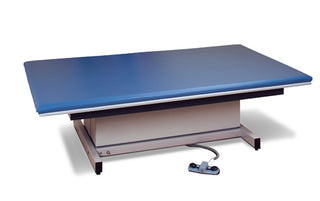
Clinton Industries 253 Series Hi-Lo Mat Platform
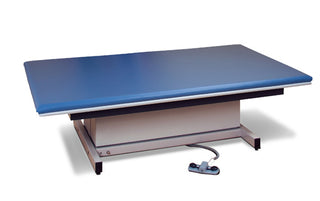
- With electric height adjustment from 22 inches up to 34 inches using a hands-free foot pedal control. The therapist can drop the surface down to a safe, easy reach height for wheelchair-level transfers then lift it again to a comfortable manual therapy working height, all without having to reposition or stop touching the patient.
- It has a 600-pound weight capacity, built on a heavy-duty, all-welded steel frame fabricated in the USA. The whole thing stays solid when dealing with the combined load of patient plus therapist during treatment, exercise, and positioning tasks on the platform top.
- You can choose platform sizes like 4-foot by 7-foot (48 inches by 84 inches) or 5-foot by 7-foot (60 inches by 84 inches). The 4-foot width is the standard clinic specification, while the 5-foot width is suggested for neurological rehabilitation, pediatric therapy, and bariatric applications, because the extra lateral surface area helps with more complicated patient setups.
- The top is an ultra-firm 2-inch padded surface, wrapped in tough woven-back vinyl upholstery. This gives a firm, non-compressible treatment surface needed for effective weight-bearing exercise, balance training, and manual therapy techniques, but it still feels comfortable enough for long periods of patient positioning.
- It uses a single motor electric drive, running on 110 volts, 60 Hz at 2.7 amps, plus built-in overload protection. The height change stays smooth and steady, with no sudden surges and no vibration, which helps prevent startling or destabilizing patients during positioning transitions.
- The platform has an all-welded steel base design with no bolted joints in the structural frame. That removes joint flex and side-to-side wobble, and it helps protect both patient and therapist confidence during energetic mat-level exercise and hands-on manual therapy tasks.
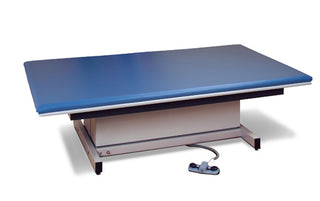
Clinton Industries 252 Power Mat Platform
- This heavy-gauge steel build gives you a supremely rigid, vibration-resistant platform base that stays absolutely stable during the most demanding rehabilitation routines, including jumping work, quick weight shifts, and high-force manual therapy methods.
- There is a comfortable 2-inch padded surface with durable woven-back vinyl. It balances clinical firmness against the patient comfort you want for longer sessions on the mat platform, so there is less chance of discomfort or pressure-related patient repositioning happening mid-treatment.
- The motorized height adjustment system uses a foot-activated control so the whole thing stays hands-free while you work. That means the therapist never has to pull away from manual contact with the patient, just to change the table height between exercise progressions or when handling positioning changes.
Fixed-Height Wood Mat Platforms: Bariatric Strength and Classic Clinical Durability
Fixed-height wooden mat platforms are a time-tested option with structurally exceptional performance, especially in clinical settings where the standard working height is a good fit for most patients and where the highest possible weight capacity is a non-negotiable clinical requirement. The non-motorized design means outstanding structural strength. Since there are no mechanical components, the full structural ability of the hardwood frame and multi-leg base is available to carry the load rather than wasting capacity on mechanism. For bariatric rehabilitation programs, inpatient therapy gyms that handle challenging patient populations, and facilities where maximum durability with very minimal maintenance is the priority, the fixed-height wood mat platform is the definitive clinical choice.
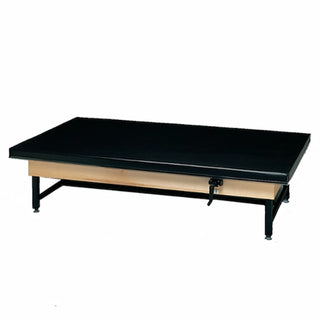
Clinton Industries Classic Wood Upholstered Mat Platform (Model 240)
- This is built for real, with a 700-pound weight capacity on a natural oak hardwood base. The corner legs are triple-bolted, plus there are two center support legs too, which gives it a really sturdy structural foundation that can handle bariatric patients as well as the combined weight of the therapist working right on top.
- You can get it in three platform sizes: 4-foot by 7-foot, 5-foot by 7-foot, and 6-foot by 8-foot. The 6-foot by 8-foot layout is one of the biggest footprints offered for advanced neurological rehabilitation, pediatric movement therapy, and even group exercise programming.
- The height is fixed at 18 inches, so the platform surface sits low and that is what helps with floor-accessible use. This setup supports safer patient floor transfers, floor-to-chair transitions, and ground-level exercise activities. It removes the height difference that often makes mat-level work feel unsafe when dealing with standard-height treatment tables.
- For the top, it has heavy-duty upholstered surface with high-density foam padding, then a durable vinyl cover. It comes in multiple color choices too. The result looks professional in a clinic setting and stays cleanable, which is exactly the kind of firm barrier infection control requirements call for in healthcare environments.
Pivotal Health Solutions 6-Leg Mat Platform
- This setup uses six triple-bolted legs made from natural oak or maple hardwood, which gives standout lateral and vertical stability. With a six-leg base, the load gets spread more evenly than four-leg designs and that pretty much removes platform flex, wobble, or any noticeable movement while patients are doing active exercises or during more vigorous manual therapy sessions.
- You also get a 700-pound weight capacity, so it fits the whole range of clinical patient populations. That includes bariatric patients, meaning rehab programs can reach their broadest possible audience without running into equipment limitations or having to swap out gear too soon.
- There is 1.5-inch high-density foam padding, plus a choice of 12 upholstery colors. This gives facilities the ability to coordinate with their clinical decor while still keeping the firm, supportive surface needed for effective rehabilitation exercise and manual therapy.
Choosing the Right Mat Platform for Your Rehabilitation Setting
Picking the right mat platform for a clinical space depends on a bunch of details at once. You will want to think about your patient mix first, then how your transfers and mobility routines actually happen day to day. After that, consider the space limits in the facility and also how durable the system really needs to be over the long run.
- Patient Transfer Needs and Height Adjustment: If you are working in any clinical environment where patients need help moving on and off the mat surface, think neurological rehab, post-surgical acute care, geriatric rehabilitation, or basically any program dealing with mobility limitations, then an electric hi-lo model should be the main focus. Being able to lower the platform down to wheelchair height can really reduce the injury risk connected to transfers. It helps both patients and therapists, even when staff are moving with less than perfect timing.
- Weight Capacity Requirements: For most outpatient PT and sports medicine environments, a 600-pound capacity platform is usually enough for the majority of patients. But bariatric programs, inpatient rehab departments, and SNF therapy gyms should look for a 700-pound rating or higher, so you avoid equipment limits. When you plan for the full patient census, you are less likely to hit a ceiling midweek.
- Platform Size and Intended Clinical Application: The 4-foot by 7-foot platform is the typical setup for many outpatient and sports medicine settings. Neurological rehabilitation programs that support rolling, crawling, and more advanced balance work often do better with a 5-foot by 7-foot platform, or even larger. That extra length gives you better room for lateral movement, which can be a big deal in real sessions. For pediatric and developmental therapy settings, where group programming happens, the biggest platform sizes available tend to work best, because everyone needs space and the flow stays smoother.
- Maintenance and Mechanical Considerations: Electric hi-lo platforms do call for periodic inspections and maintenance, especially for the motorized lift system and the control parts. In contrast, wood fixed-height platforms are much simpler: they require virtually no mechanical maintenance and tend to bring the lowest long-term upkeep cost compared with other mat platform options. When deciding between motorized and non-motorized configurations, also think about how much biomedical engineering support your facility can realistically provide.
Why MediDepot Is Your Source for Therapy Mat Tables
MediDepot is a dedicated American supplier for medical and rehabilitation equipment, and honestly we get the way physical therapy, occupational therapy, and neurological rehab setups can be very particular. Our mat table and platform line is built around clinical-grade products from top manufacturers like Clinton Industries and Pivotal Health Solutions. These are names that therapy departments, inpatient rehabilitation centers, and sports medicine facilities across the country already lean on, because the track record for performance, durability, and patient safety is solid.
When you source your mat tables from MediDepot, you are not just getting equipment, you are getting fast shipping across the continental United States, plus the help of our product selection team who knows the details you actually care about. There is also that peace of mind you get when you partner with a clinical equipment supplier that understands what professional rehabilitation practice really requires. Whether you are setting up one therapy room or outfitting an entire inpatient rehab gym, MediDepot has the therapy mat table and platform solution that your patients and therapists deserve.
Frequently Asked Questions (FAQ)
Q: What is the difference between a treatment table and a mat table?
A: The primary difference is width and height. Standard treatment tables are typically 27 to 30 inches wide, designed for massages or targeted manipulation. Mat tables are much wider, usually 4 to 6 feet wide, and often sit closer to the ground. This provides a safe, expansive area for patients to perform rolling, stretching, and crawling exercises without the risk of falling off an edge.
Q: What is a Bobath table used for?
A: A Bobath table is a specific type of extra-wide therapy platform used for Neuro-Developmental Treatment (NDT), often for patients recovering from strokes or managing cerebral palsy. The table is wide and strong enough for the physical therapist to get on the table with the patient to guide their movements and posture safely.
Q: Are space-saving folding mat tables safe?
A: Yes. High-quality wall-mounted folding mat tables, like those from Clinton Industries or Hausmann, use heavy-duty steel mounting brackets and auto-locking floor legs. When properly installed into wall studs, they offer the same massive weight capacities, often 500 to 1000 lbs, as stationary tables.
Q: Do Hi-Lo Mat Tables qualify for the ADA Tax Credit?
A: Yes, electric Hi-Lo mat tables that can lower to 17 to 19 inches (wheelchair transfer height) generally meet ADA compliance standards. Small healthcare businesses may qualify for the IRS Section 44 Tax Credit, which can cover up to 50% of the equipment's cost. Always consult a tax professional for verification.
Q: What size mat table should I buy?
A: The 4-foot by 7-foot size is the industry standard and fits well in most clinics. If you specialize in pediatric therapy or neurological rehab where the therapist must frequently be on the table, a 5-foot by 7-foot or 6-foot by 8-foot platform is highly recommended.