


Lightweight Aluminum Carts in 6 and 7 Drawer Configurations
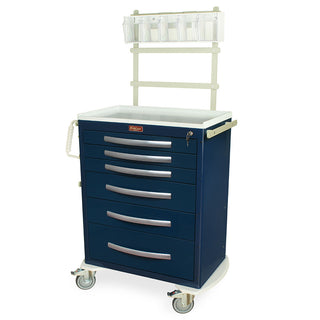
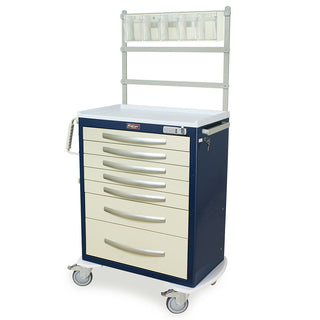
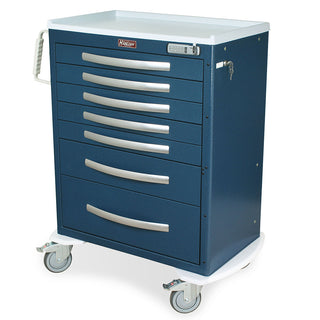
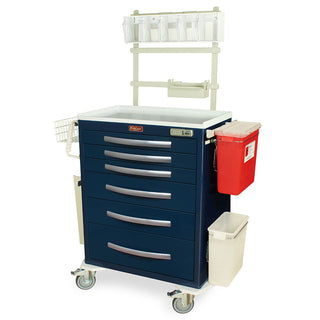
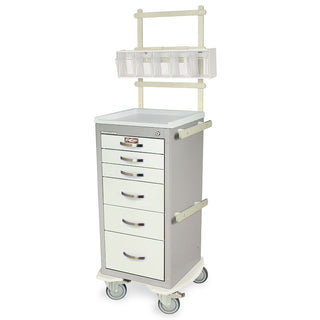
An anesthesia cart is a mobile drawer unit that holds the drugs, airway equipment and supplies an anesthesia provider needs within arm's reach at the head of the table, with locking that satisfies controlled substance requirements. This collection carries 12 carts, mostly Harloff A-Series aluminum units in 6 and 7 drawer configurations, alongside Lakeside Classic and a MidCentral stainless steel model.
Two things separate an anesthesia cart from a general medical cart, and both come from where it lives. It sits at the head of the operating table in the tightest part of the room, so footprint matters more than storage volume. And it holds controlled substances, so the locking mechanism is a compliance requirement rather than a convenience feature.
Everything below follows from those two constraints.
→ Part of Medical Carts. Also see Utility Carts, Cabinets & Casework, Operating Room and All Clinic & Exam Equipment.
Six Drawers or Seven?
The difference is not total capacity, it is drawer height. A seven-drawer cart divides the same cabinet into more, shallower drawers; a six-drawer cart gives fewer, deeper ones.
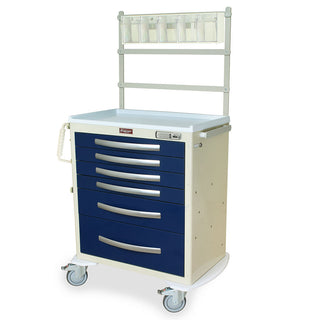
Shallow drawers suit ampoules, syringes and small airway items, where depth is wasted and finding one item among many is the real problem. Deeper drawers suit bulkier equipment: laryngoscope handles, masks, circuits. Most providers end up wanting a mix, which is why cart layouts are worth mapping against what you actually stock before ordering rather than after.
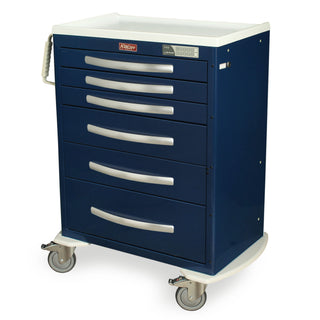
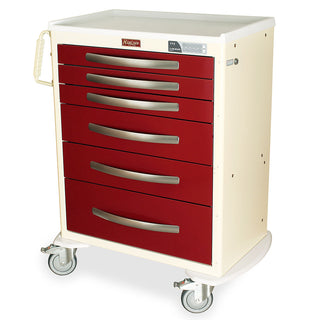
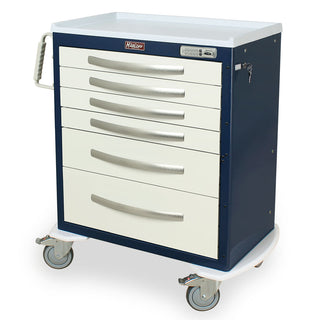
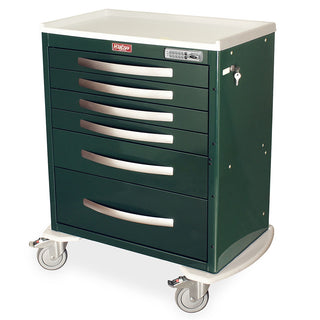
Six-drawer options include the Harloff MPA3027E06, the MPA3030E06 MD30 and the MPA3030K06. Seven-drawer: the MPA3030E07 lightweight and the MPA3030E07 MD30.
Narrow carts for tight rooms
The space at the head of the table is frequently the constraint, particularly in older operating rooms and in procedure rooms never designed for anesthesia. The Harloff MPA1830K06 MD18 narrow cart keeps six drawers in a reduced width, and the MPA1830EKC06 auto-locking narrow cart adds automatic locking to the same footprint. Measure the space with the anesthesia machine in position before choosing a width, since the machine is what actually determines how much room is left.
Locking: Key, Auto-Locking or Electronic
Because anesthesia carts hold controlled substances, the locking mechanism is a compliance matter governed by your facility policy and applicable regulation, not a preference.
- Key lock (K in the model code): simple, no power, no batteries. The weakness is key control, which becomes an administrative burden and a documented gap when keys circulate among staff.
- Auto-locking (KC): the cart relocks itself after a set interval, which removes the most common failure mode. A cart left unlocked during a case is unlocked because someone was busy, not careless, and auto-locking is designed around that reality.
- Electronic (E): code or badge access with an audit trail, which is what supports documentation requirements around controlled substance access.
The Harloff codes read directly: MPA3030EKC06 combines electronic and auto-locking, while MPA3027E06 is electronic and MPA3030K06 key lock. Confirm which mechanism your pharmacy and compliance function require before ordering, since retrofitting a lock type is not usually practical.
Aluminum or Stainless Steel?
Aluminum carts are substantially lighter, which matters because an anesthesia cart is repositioned constantly during setup, the case and turnover. Stainless steel is heavier but takes harsher cleaning chemistry and physical abuse.
In practice the weight difference decides most purchases. A cart that is awkward to move gets left in one position, and a cart left in one position is in someone's way. The Harloff A-Series is aluminum throughout for this reason. Where the environment demands stainless, the MidCentral TBL5230-T stainless steel cart with removable tray is the option here, and the removable tray means the working surface can be taken away for cleaning rather than wiped in place.
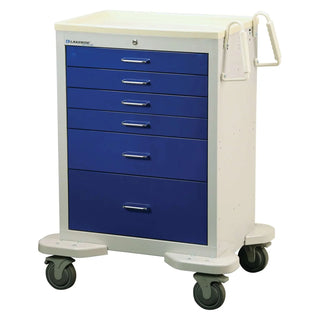
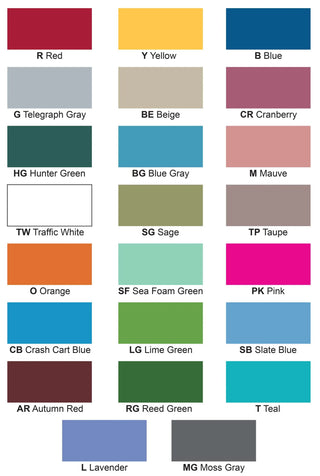
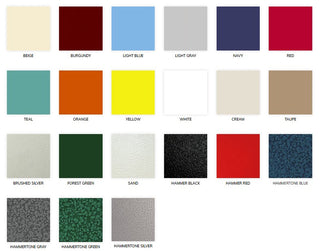
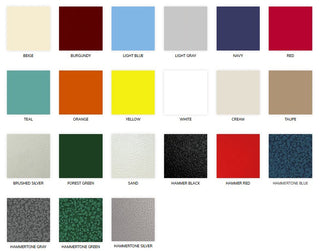
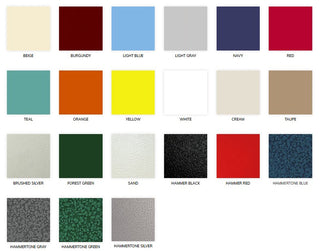
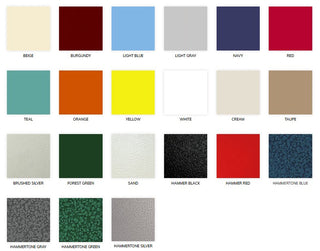
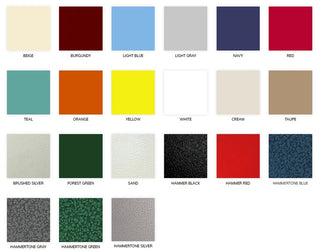
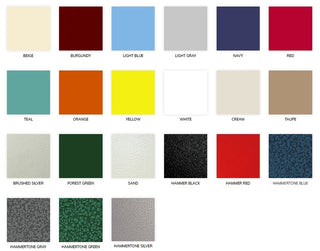
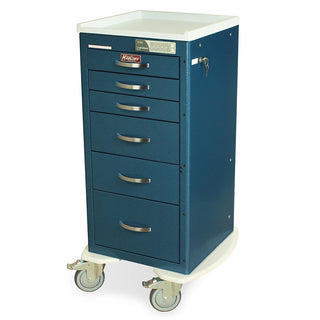
Lakeside's Classic range covers a middle ground: the Classic 6-drawer and the blue with telegraph gray version. Colour coding is not decorative in a department running several cart types: it lets staff identify the right cart at a glance in a room where every second of hesitation is noticed.
Frequently Asked Questions
What is the difference between an anesthesia cart and a general medical cart?
An anesthesia cart is configured for the drugs, airway equipment and supplies an anesthesia provider needs at the head of the table, with a drawer layout suited to ampoules and small items, a compact footprint for tight positioning, and locking that meets controlled substance requirements. General medical and crash carts have different drawer layouts and different access priorities. See Utility Carts for general medical cart configurations.
Should I choose a six or seven drawer cart?
The difference is drawer height, not total capacity. Seven drawers divide the same cabinet into more, shallower drawers, which suits ampoules, syringes and small airway items where depth is wasted and finding one item is the real problem. Six drawers give deeper compartments for bulkier equipment such as masks and circuits. Map the layout against what you actually stock before ordering.
What locking mechanism does an anesthesia cart need?
That is determined by your facility policy and applicable regulation for controlled substance storage, not by preference. Key locks are simple but create a key control burden. Auto-locking carts relock themselves after an interval, which addresses the most common failure, a cart left unlocked because someone was busy. Electronic locks add code or badge access with an audit trail. Confirm the requirement with your pharmacy and compliance function before ordering, since lock type is not usually retrofittable.
Aluminum or stainless steel?
Aluminum is substantially lighter, which matters because an anesthesia cart is repositioned constantly during setup, the case and turnover. A cart that is awkward to move gets left in one place and ends up in the way. Stainless steel takes harsher cleaning chemistry and more physical abuse but weighs considerably more. For most operating rooms, aluminum is the practical choice.
How much space does an anesthesia cart need?
Measure the space at the head of the table with the anesthesia machine in its working position, since the machine determines how much room is actually left. Narrow carts such as the MD18 keep six drawers in a reduced width for older operating rooms and procedure rooms never designed for anesthesia. Also check the drawer pull-out clearance, not just the cart footprint, because a drawer that cannot open fully makes the back of it unusable.
Why do anesthesia carts come in different colours?
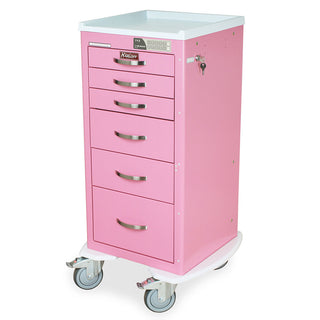
Colour coding lets staff identify the right cart at a glance in a department running several cart types, which matters in a room where hesitation is noticed. It is a workflow feature rather than a decorative one. If your facility already colour codes carts by function, match the new cart to that scheme rather than introducing a fourth colour.
What does a removable tray add?
It lets the working surface be taken away and cleaned properly rather than wiped in place, which matters on a surface that sees drug preparation between cases. It also means a contaminated tray can be swapped for a clean one immediately during turnover rather than holding up the room for cleaning.
How do I read Harloff A-Series model numbers?
MPA is the A-Series family, the digits give the cabinet dimensions, and the letters before the final digits indicate the lock type: K for key, E for electronic, KC for auto-locking, with combinations such as EKC meaning electronic plus auto-locking. The final two digits are the drawer count. So MPA3030EKC06 is a 30x30 cabinet with electronic auto-locking and six drawers.
Do anesthesia carts ship assembled?
Generally yes, arriving assembled on a pallet by freight and needing only unwrapping and positioning. Electronic lock models may require initial code setup and, on some units, battery installation before first use. Check the individual product page for delivery method, and for a multi-room order request a quote so freight can be consolidated.
MediDepot Purchasing Advantages
- Price Match Guarantee: found the same model number for less elsewhere? We will match the verified price.
- Equipment Financing: available on multi-cart departmental orders.
- Extended Warranty: coverage on locking mechanisms and drawer slides beyond the manufacturer term.
- Military Discount: available for qualifying military medical facilities and personnel.
- Request a Quote: lock type confirmation, drawer configuration, colour matching and freight scheduling.
Related Buying Guides
- Physician Office Setup Checklist
- Medical Equipment Quote Comparison Checklist
- Private Practice Equipment Buying Mistakes
- How to Verify Authorized Medical Equipment Sellers