






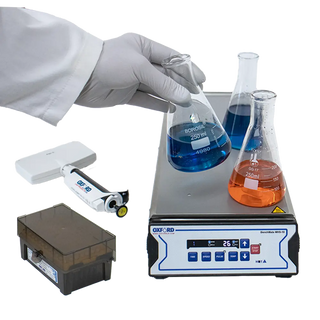
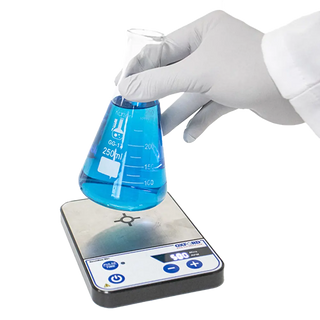


In a laboratory environment, proper sample preparation is essential for obtaining accurate and reproducible results. Whether working with cellular cultures, purifying nucleic acids, homogenizing complex mixtures, or quickly vortexing a solution, having reliable tools like centrifuges, shakers, mixers, stirrers, and vortexers is critical to workflow success.
The Lab Centrifuges, Shakers & Mixers | Stirrers & Vortexers category at MediDepot provides a broad selection of specialized instruments designed to enhance operational efficiency across clinical, research, academic, and industrial laboratories throughout the United States.
This comprehensive collection focuses on equipment that optimizes sample processing through speed, consistency, and versatility. From compact benchtop devices designed for space-constrained workspaces to high-throughput multi-functional units, these instruments offer intuitive controls, durable construction, and precise performance. Designed to withstand rigorous daily use, this equipment ensures reliable sample processing for a wide range of scientific applications.
This guide explores the various types and key features of centrifuges, shakers, mixers, stirrers, and vortexers, providing insights into their practical applications to help you select the ideal instruments for your laboratory requirements.
Why Centrifuges, Shakers & Mixers Are Essential in the Lab
Laboratory workflows rely on several fundamental processing steps to ensure sample integrity and test accuracy:
- Separation: Isolating liquids from solids or separating fractions of varying densities using centrifugal force.
- Mixing: Combining liquids or chemical components thoroughly to achieve homogeneity.
- Agitation and Suspension: Maintaining particles in continuous motion to prevent settling during incubation phases.
- Resuspension: Re-dispersing pellets or precipitates into solution following centrifugation.
- Sample Preparation: Processing biological, chemical, or environmental samples for downstream analytical techniques.
Each instrument category in this collection serves a specific purpose in delivering repeatable results, supporting critical downstream applications such as PCR, ELISA, spectroscopy, chromatography, and cell culture.
Laboratory Centrifuges: Precision Separation with Speed and Control
Laboratory centrifuges utilize high-speed rotational force to separate substances based on relative density. They are essential tools for plasma separation, DNA/RNA purification, protein isolation, and routine diagnostic testing.
When selecting a laboratory centrifuge, key parameters to evaluate include rotational speed capabilities, volume capacity, and specific application requirements.
Key Features of Centrifuges
- Adjustable Speed Control (RPM and RCF): Allows precise adjustment of rotational speed (RPM) and relative centrifugal force (RCF) to suit diverse sample types.
- Multiple Rotor Options: Accommodates microplates, microtubes, conical tubes, and larger sample vessels.
- Automatic Imbalance Detection: Identifies unbalanced rotor loads to protect samples and prevent equipment damage.
- Intuitive User Interfaces: Features programmable digital displays that allow users to store protocols for consistent, repeatable runs.
- Advanced Safety Features: Includes automated lid locks, over-temperature protection, and audible operational alarms to maintain laboratory safety standards.
Centrifuge Types in This Category
Mini and Compact Centrifuges
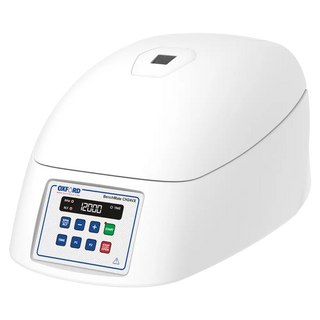
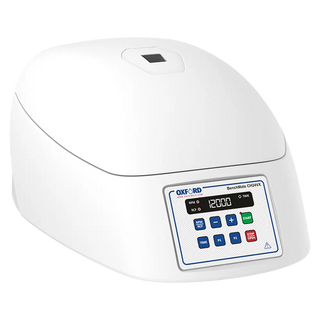
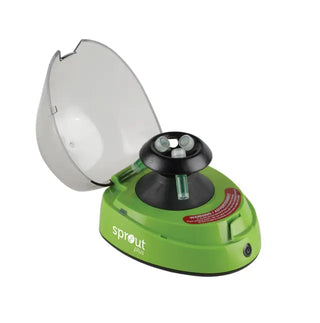
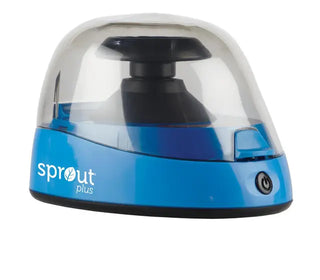
Designed for tight benchtop footprints, compact units are ideal for quick spin-downs, cell pelleting, or serum separation where lower speed ranges and smaller tube formats are utilized.
High-Speed and Multi-Function Centrifuges
Versatile benchtop centrifuges offer high RCF capabilities and interchangeable rotor configurations, making them suitable for processing larger sample volumes and supporting complex protocol requirements.
Clinical and Diagnostic Centrifuges
Engineered specifically for medical and diagnostic laboratories, these models deliver standardized, highly repeatable separation parameters required for clinical blood and fluid processing.
Shakers & Rockers
Shakers and rockers provide controlled mechanical agitation to facilitate mixing, chemical reactions, or gentle washing of biological specimens. Available models differ by motion dynamics and operational intensity.
Types of Shakers & Rockers
Orbital Shakers
Provide a continuous circular motion ideal for swirling liquids in flasks, tubes, and culture plates. Common applications include cell culture maintenance, suspension growth, and staining protocols.
Reciprocal and Linear Shakers
Deliver a back-and-forth linear motion designed for applications requiring gentle agitation, such as hybridization, ELISA assays, and blotting procedures.
Rockers and Tilt Rockers
Utilize a gentle see-saw motion ideal for gel processing, membrane washing, and sensitive staining protocols that require steady, low-shear liquid movement.
Important Shaker Features
- Adjustable Speed and Tilt Angle: Enables precise control over agitation intensity to match sensitive or vigorous application requirements.
- Universal Platform Compatibility: Accommodates interchangeable holders for microplates, test tube racks, and Erlenmeyer flasks.
- Integrated Timer Functions: Supports automated operational cycles for standardized testing protocols.
- Quiet Operation and Low-Vibration Stability: Ensures quiet performance in shared laboratory environments.
Mixers, Stirrers & Vortexers
Mixers, stirrers, and vortexers deliver rapid or continuous fluid agitation to achieve complete solution homogeneity, dissolve solutes, or resuspend cellular pellets.
Magnetic Stirrers and Hotplates
Magnetic stirrers utilize a rotating magnetic field to spin a stir bar within a liquid vessel, ensuring uniform mixing. Hotplate models combine liquid stirring with precise temperature control. Primary applications include:
- Dissolving solid solutes into liquid solvents
- Preparing buffer and reagent solutions
- Maintaining consistent reaction temperatures during stirring
Vortex Mixers
Vortexers provide rapid, high-frequency oscillatory motion to quickly mix small volumes of fluid in tubes. Key applications include:
- Resuspending cell pellets following centrifugation
- Rapidly mixing reagents prior to assay analysis
- Ensuring uniform sample distribution before pipetting
Featured Instruments and Capabilities in This Collection
MediDepot offers a comprehensive selection of sample processing instruments tailored to meet diverse research and operational demands.
Laboratory Centrifuges
- Compact Benchtop Centrifuges: Space-saving designs with variable speed controls suited for 0.2 mL to 15 mL tube formats.
- Multi-Rotor High-Speed Centrifuges: High-RCF instruments with flexible rotor options for advanced molecular and cellular separation.
- Diagnostic Centrifuges: Standardized units built for precise speed and run-time control during routine clinical analysis.
Shakers & Rockers
- Orbital Shakers: Deliver uniform orbital motion with stable platforms for culture flasks, multi-well plates, and tube racks.
- Linear Shakers: Precise back-and-forth motion with adjustable stroke lengths for specialized assay processing.
- Tilt Rockers: Low-shear, silent-operating rocking platforms for gel washing and membrane incubation.
Mixers & Stirrers
- Magnetic Hotplate Stirrers: Dual-function heating and stirring equipment with digital speed and thermal regulation.
- Vortex Mixers: High-speed, touch-activated or continuous-run mixers suitable for microcentrifuge to large conical tubes.
Selecting the Right Equipment for Your Lab Needs
To choose the ideal sample processing equipment, evaluate the following operational criteria:
1. Application Requirements
- For sample separation (blood fractions, nucleic acid extraction), select centrifuges with appropriate speed (RPM/RCF) ratings and rotor capacities.
- For continuous incubation and agitation, choose shakers or rockers with customizable motion settings.
- For rapid fluid homogenization, select vortex mixers or magnetic hotplate stirrers.
2. Sample Format and Capacity
Ensure the instrument's platforms, rotors, or adapters are compatible with your standard labware, such as microtubes, conical tubes, culture flasks, or microplates.
3. Precision and Speed Control
Select units with digital interfaces and programmable operational profiles when compliance, reproducibility, and protocol standardization are required.
4. Laboratory Footprint
Consider available bench space. Compact units optimize smaller workspaces, while multi-functional devices consolidate multiple processing steps into a single footprint for high-throughput facilities.
5. Safety and Ergonomic Features
Prioritize units featuring automated lid locks, imbalance detection, chemical-resistant surfaces, and low-noise motors to maintain a safe and comfortable working environment.
Best Practices for Centrifuge, Shaker & Mixer Use
Adhering to routine operational best practices ensures equipment longevity and reliable performance:
- Calibration and Maintenance: Regularly verify speed, timer, and temperature settings to maintain compliance and accuracy.
- Balanced Rotor Loading: Always balance centrifuge rotors symmetrically to avoid mechanical wear, excessive vibration, or drive shaft damage.
- Surface Decontamination: Clean platform pads, rotor chambers, and stirrer surfaces regularly to prevent chemical corrosion and cross-contamination.
- Proper Tube Selection: Use tube formats rated for the specific RCF levels and platform dimensions of your equipment.
- Operator Safety Training: Train laboratory personnel on safe operational procedures, emergency stop protocols, and correct personal protective equipment (PPE) usage.
Essential Sample Processing Tools for Every Lab
The Lab Centrifuges, Shakers & Mixers | Stirrers & Vortexers category at MediDepot offers high-quality solutions engineered for accuracy, speed, and durability. Whether performing delicate tissue culture mixing or high-speed molecular separations, having the correct equipment ensures workflow efficiency and reliable experimental outcomes.
Frequently Asked Questions (FAQ)
What is the difference between RPM and RCF in laboratory centrifuges?
RPM (Revolutions Per Minute) measures how fast the centrifuge rotor turns. RCF (Relative Centrifugal Force), measured in g-force, refers to the actual force exerted on the sample. Because RCF accounts for the rotor's radius as well as its speed, RCF is the standard unit used in scientific protocols to ensure reproducibility across different centrifuge models.
Can orbital shakers be used inside laboratory incubators?
Many orbital shakers are designed for incubator compatibility, but it is essential to verify the manufacturer specifications. Models intended for incubator use feature sealed electronics, moisture-resistant housings, and brushless motors capable of operating continuously under elevated humidity and temperature conditions.
Why is automatic imbalance detection important in a centrifuge?
Automatic imbalance detection senses asymmetric weight distribution in the rotor during acceleration. If an imbalance is detected, the system automatically stops the run to prevent mechanical failure, rotor damage, liquid spillage, or potential injury to laboratory personnel.
When should I choose a magnetic stirrer over a vortex mixer?
Use a magnetic stirrer for continuous, long-term mixing of larger liquid volumes or when heating is required alongside agitation. Use a vortex mixer for rapid, short-duration homogenization of small volumes in closed tubes, such as resuspending a cell pellet or mixing assay reagents.