




Treatment Tables, Mat Platforms and Portable Surfaces
Therapy tables divide into two formats that do genuinely different work: narrow treatment tables, where the therapist works over a patient lying still, and wide mat tables, where the patient moves on the surface and the therapist moves with them. This collection carries 93 items across both, from Pivotal Health, Bailey Manufacturing, Clinton Industries, Mettler Electronics, Healthy You, Hausted, Circle Specialty and Power Mat.
Clinics buying their first table often default to a treatment table because it is the familiar shape, then discover that half their caseload needs the other one. A patient practising rolling, coming to sitting, or transferring from a wheelchair runs out of surface on a 24 inch top before the movement is finished. The width is not a comfort feature; it is what makes the activity possible at all.
→ Browse by type: PT Treatment Tables, Mat Tables & Platforms and Portable Treatment Tables. Also see Rehabilitation Equipment and Traction & CPM.
Treatment Table or Mat Table?
| Treatment table | Mat table / platform | |
|---|---|---|
| Width | Narrow, therapist reaches across | Wide, patient moves on the surface |
| Patient is | Largely still while treated | Moving, transitioning, exercising |
| Therapist is | Standing at the side | Often kneeling on the surface |
| Typical work | Manual therapy, modalities, assessment | Neuro rehab, transfers, floor-level exercise, pediatrics |
Most clinics with a mixed caseload end up needing both. The question is which comes first, and that follows from the caseload rather than from price: a musculoskeletal practice starts with treatment tables, a neurological or pediatric service starts with mat tables.
Mat Tables: Why Hi-Low Changes What Is Possible
A hi-low mat table drops close to the floor and rises to working height, which resolves a contradiction fixed-height mat platforms cannot.
The contradiction is this. To transfer from a wheelchair, the surface must be at roughly seat height. To get onto it from the floor, or to practise getting up off the floor, it must be low. But for the therapist working over the patient afterwards, it must be at their working height. A fixed platform picks one and lives with the consequences of the others; a hi-low table changes between them during a single session.
That matters most for exactly the patients mat tables exist for. Someone relearning to get up from the floor needs the surface low. Ten minutes later, the therapist doing hands-on work with them needs it high. On a fixed platform, one of those two happens badly.
Electric hi-low
The Bailey 4124 to 4127 economy electric hi-lo upholstered mat tables, the Clinton 253 hi-lo mat platform with upholstered top and the upholstered top hi-low mat table at 5 x 7 x 2.
Manual crank
Manual crank versions cost considerably less and have no motor to fail, at the cost of taking both hands and time to change height, which in practice means the height gets set once per patient rather than adjusted during a session. See the Bailey 4114 to 4117 economy manual crank hi-lo tables and the economy manual crank mat table at 3 x 7 x 2.
Bariatric mat tables
Rated to 1000 lb with a wider surface: the Bailey 4520 bariatric mat table at 4 ft x 7 ft, the Bailey Barimatic 4554 to 4556 electric hi-lo mat tables at 1000 lb, and Pivotal Health's PT2000 and PT2001 bariatric hi-lo mat tables.
On a bariatric mat table the electric lift is close to essential rather than optional, because the whole point of the low position is enabling a transfer that a manual crank cannot deliver quickly enough while a patient is mid-movement.
Mat Platform Sizing
Platform dimensions determine what can happen on the surface. Width sets whether the therapist can kneel beside the patient; length sets whether a full-length adult can lie with room to move.
- 4 x 7 ft: the working minimum for adult mat work. Room for the patient and a therapist at the side. See the Power Mat platform 4x7 with mat.
- 5 x 7 ft: the general-purpose size. Enough width for the therapist to kneel on the surface alongside the patient, which is what most transition work requires. See the Power Mat platform 5x7.
- 6 x 8 ft: for two-therapist handling, larger patients, or paediatric work where equipment and a parent are also on the surface. See the Power Mat platform 6x8.
Also stocked: Bailey 454/456/457 upholstered top mat tables in three sizes at 500 lb, the Clinton 240 upholstered mat platform, Pivotal Health Aluma-Elite mat tables and the Bailey 6043 lift platform, 24 x 24 carpeted.
Space-saving platforms
A mat platform occupies a lot of floor, and in a room that also runs exercise sessions that is expensive space. The Bailey 458 wall-mounted mat platform at 500 lb and the Clinton 243 space-saving folding mat platform fold away, returning the floor between sessions. Both need a wall with adequate structure, so this is a fit-out decision rather than a purchase that can be reversed easily.
Fixed-Height Treatment Tables
Where height adjustment is not needed, fixed-height tables cost less and have nothing to fail. Clinton's Premium Classic and Alpha series cover the base configurations: H-brace models such as the 1010 and 1015 Premium Classic 500; shelf models including the 1020 at 27 inch, the 1020 at 30 inch, the 1025 and the 1030 with shelving; drawer models such as the 1135; and the Alpha 3030 with shelving.
Hausted's 4105 series adds an adjustable back and contoured top: the 4105 with adjustable back and contoured top and the 4105 with drawers. For leg positioning work, the Bailey 484 double adjustable leg rest table at 350 lb.
Electric, Bobath, tilt, traction and multi-section motorised tables are covered in detail in PT Treatment Tables.
Portable and Athletic Tables
Portable tables serve work that happens where the patient is: sidelines, home visits, outreach clinics and events. The constraint is always the same, that the table has to be light enough to carry and rigid enough to work on, and those pull against each other.
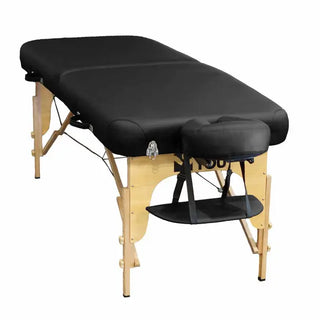
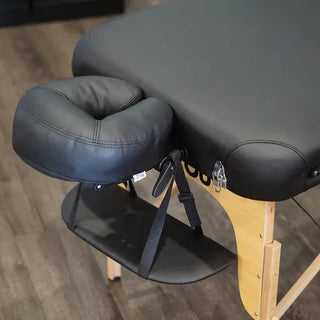
The Bailey Model 28 portable sideline mobile athletic treatment table at 1000 lb is built for pitch-side work, where the table is moved constantly and treats athletes at full body weight. The Healthy You HEA112 professional portable massage table and the Circle Specialty Axis therapy bench in small, medium and large at 12 to 27 lb cover lighter transport. See Portable Treatment Tables.
Frequently Asked Questions
What is the difference between a treatment table and a mat table?
A treatment table is narrow, so the therapist stands at the side and reaches across a patient who stays largely still. A mat table is wide, so the patient can move on the surface and the therapist can kneel beside them. Treatment tables suit manual therapy, modalities and assessment; mat tables suit neurological rehabilitation, transfer practice, floor-level exercise and pediatrics. Most mixed clinics need both.
Why does mat table width matter?
Because the patient is moving on it. Someone practising rolling, coming to sitting or transferring runs out of surface on a narrow top before the movement finishes, and the therapist has nowhere to kneel alongside them. Width is what makes the activity possible rather than what makes it comfortable, which is why 5 x 7 ft is generally treated as the working general-purpose size rather than a generous one.
What does a hi-low mat table solve?
A contradiction that fixed platforms cannot. Transferring from a wheelchair needs the surface at roughly seat height; practising getting up from the floor needs it low; the therapist working over the patient afterwards needs it high. A fixed platform picks one. A hi-low table moves between all three during a single session, which matters for exactly the patients mat tables exist for.
Electric or manual crank hi-low?
Manual crank costs considerably less and has no motor to fail, but changing height takes both hands and time, so in practice the height gets set once per patient rather than adjusted during a session. Electric allows adjustment mid-session with the patient on the table. On bariatric tables electric is close to essential, since the low position exists to enable a transfer that a crank cannot deliver quickly enough mid-movement.
What size mat platform should I choose?
4 x 7 ft is the working minimum for adult mat work, with room for the patient and a therapist at the side. 5 x 7 ft is the general-purpose size, giving enough width for the therapist to kneel on the surface alongside the patient. 6 x 8 ft suits two-therapist handling, larger patients, or pediatric sessions where equipment and a parent are also on the surface.
What capacity do bariatric mat tables have?
The bariatric models in this collection are rated to 1000 lb with a wider surface. Width matters alongside the rating: a patient wider than the platform cannot be safely handled on it regardless of what the frame will carry, and the therapist needs room at the side to work. Check both figures against your patient population rather than the capacity alone.
When does a folding or wall-mounted mat platform make sense?
When the room has to serve more than one purpose. A mat platform occupies a large amount of floor, and in a space that also runs exercise sessions that is expensive. Folding and wall-mounted platforms return the floor between uses. Both require a wall with adequate structure to carry the load, which makes it a fit-out decision rather than an easily reversed purchase.
Do I need a hi-low table or is fixed height enough?
Fixed height works where a single therapist of consistent stature treats patients who transfer independently. Height adjustment earns its cost where therapists of different heights share the table, where patients need a low surface to get on, or where a session involves both patient movement at low height and hands-on work at working height. In a shared or varied practice that describes most days.
What should a portable table weigh?
Light enough to carry to where it is needed and rigid enough to work on, which pull against each other. Lighter tables around 12 to 27 lb suit home visits and outreach where the table is carried by one person. Heavier portable tables trade weight for capacity and rigidity, which is what sideline athletic work requires, since those tables are moved on wheels rather than carried and treat athletes at full body weight.
Which table should a new clinic buy first?
That follows from the caseload rather than the price. A musculoskeletal practice starts with treatment tables, since most work is hands-on with the patient lying still. A neurological or pediatric service starts with mat tables, since transition and floor-level work is the core of it. Buying the familiar shape first and discovering half the caseload needs the other one is a common and avoidable sequence.
MediDepot Purchasing Advantages
- Price Match Guarantee: found the same model for less elsewhere? We will match the verified price.
- Equipment Financing: outfit several treatment bays without a single capital outlay.
- Extended Warranty: coverage on lift motors and controls beyond the manufacturer term.
- Military Discount: available for qualifying military medical facilities and personnel.
- Request a Quote: platform sizing for your room, upholstery matching across bays and freight scheduling.
Related Buying Guides
- Physical Therapy Equipment by Condition
- Private Practice Equipment Buying Mistakes
- Physician Office Setup Checklist
- Medical Equipment Financing Guide