


Bringing the Toilet to the Bed
A bedside commode is a chair with a bucket beneath the seat, placed within reach of the bed so a person does not have to make the journey to the bathroom. This collection carries 54 commode chairs from Drive DeVilbiss and Carex, Lumex, Rhythm Healthcare, Clarke Healthcare, R82, Gendron, Journey and Dynarex, in drop arm, folding, extra wide and bariatric configurations.
The journey is the point. Night-time trips to the bathroom are a leading fall scenario for older adults, and the reason is a combination that only occurs at night: the person wakes disoriented, stands too quickly and their blood pressure drops, the room is dark, and they are moving with urgency along a route they navigate half-awake. A commode at the bedside removes the whole sequence.
→ Part of Commodes & Toilet Aids. Also see Rolling Shower Commodes, Bed Rails, Grab Bars & Rails and Patient Room Furniture.
Placement: Getting the Position Right
A commode positioned badly is a commode that either does not get used or creates the fall it was meant to prevent. Three things decide the position.
- Distance from the bed: close enough to reach with one or two steps, far enough that the person does not knock into it getting out of bed. Beside the bed on the side the person leads with, not at the foot.
- Seat height against bed height: transferring across a height difference is considerably harder than transferring level, so an adjustable-height commode set to match the bed makes the move easier at the point where the person is least steady.
- What they will hold on to: the route from bed to commode should have something stable along it. A bed rail at the start and the commode arms at the end leave no gap where the person is unsupported.
Height-adjustable models make the first two solvable together: the Lumex 6433A-2 drop arm with adjustable height, the Gendron 523326 bariatric height adjustable and the 523330 at 30 inches wide.
Drop Arm: The Transfer From Bed
A drop arm lowers out of the way so the user can slide sideways from the bed onto the seat without standing. For a bedside commode that is the decisive specification, because the user is coming from a lying position and standing is the part they may not be able to do.
A fixed arm forces the full sequence: sit up, stand, turn, lower over the arm. Each step is a failure point at the time of day when balance is worst and the person is least alert. A drop arm reduces it to sitting up and sliding across.
Options: the Drive 11125KD steel frame with back bar, the 11125PSKD padded version, the 11101W with wheels and padded armrests and the 11120SV with wheels and footrest at 350 lb.
Lumex: the 6433A in silver vein finish, the 6438A extra wide and the 6810A VersaMode mobile commode.
Wheels on a bedside commode
Wheels let the commode be moved out of the way during the day and brought back at night, and let a carer reposition it without lifting. The trade-off is that a commode on wheels must have reliable locks, since a chair that moves as the user transfers onto it is a fall waiting to happen. Locks should be checked as part of the routine rather than assumed.
Folding Models and the Dignity Question
A commode in a bedroom is a visible reminder of what has changed, and that matters more to people than equipment catalogues usually acknowledge.
Folding models can be put away when visitors come or during the day, which for many users is the difference between accepting the equipment and resisting it. Resistance is not irrational here: a person who feels their bedroom has become a hospital room is responding to something real, and equipment that can disappear when not needed respects that.
Folding options: the Lumex 7108A deep seat steel folding, the 2195KD folding aluminium portable, the 7109A bariatric folding, the Drive RTL11158KDR steel folding frame at 350 lb, the Rhythm B3600F bariatric folding with blow moulded seat and the B3800F elongated folding.
Folding also matters for temporary need. Many bedside commodes are bought for a recovery period after surgery or illness, and a chair that folds into a wardrobe afterwards is easier to justify than one that has to be disposed of or stored awkwardly.
Standard, Extra Wide and Bariatric
Standard 3-in-1 commodes, which also serve as an over-toilet frame and shower chair: the Drive 11148 at 350 lb, the 11148CE Competitive Edge, the Classics padded, the Carex padded, the ProBasics with removable backrest, the Lumex 7103A Silver Collection, the 2215B aluminium at 300 lb, the Journey 33321 SoftSecure with Microban and the Pinniped padded commode.
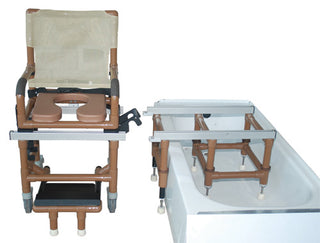
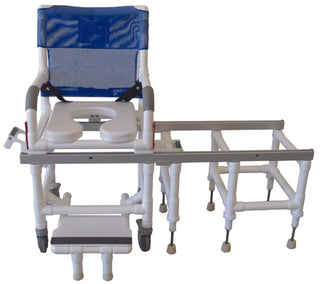
Aluminium-framed commode shower chairs, which tolerate wet use better than coated steel: the NRS18010 with flip-back arms and reclining backrest, plus the NRS185006, NRS185007 and NRS185008. PVC versions: the dual commode shower transfer chair and the one-step lock version. Also the combination padded transfer bench and commode at 400 lb and the Drive 11114KD lightweight portable with casters.
Extra wide and bariatric
Capacity runs to 1000 lb: the Drive 11135 drop arm at 1000 lb and the Rhythm B3650 DLX at 1000 lb. Also the Drive 11117N at 650 lb, the Dynarex Bari-Max heavy duty drop arm, the Lumex 2190A at 19 inch seat width, the 7446A Imperial extra wide and the SecureSeat positioning commode in large. Also the Lumex 2195A toilet assist commode, the Journey 33320 SoftSecure Uplift and the Carex Uplift commode assist.
Buckets, Liners and the Part Nobody Discusses
Someone has to empty the bucket, and who that is shapes which commode makes sense.
Where the user empties it themselves, bucket weight when full matters and a smaller capacity may be better even though it means emptying more often. Where a carer does it, and that carer is often an elderly spouse, both the weight and the walk to the bathroom carrying it are real considerations. A cover is worth having in either case.
The Drive 12 quart bucket with handle and cover and the 7.5 quart with metal handle and cover.
Liners
Carebag commode liners remove the emptying and rinsing step entirely: the bag is lifted out and disposed of, and the bucket stays clean.
That changes the daily reality substantially. Rinsing a commode bucket means carrying it to a toilet, emptying it, cleaning it and carrying it back, several times a day. It is unpleasant work that falls on the same person every time, and it is one of the more common reasons a commode gets used less than it should. Liners cost money per use and solve exactly that problem.
Pediatric Commode Systems
R82's Flamingo range covers combined bath and toileting: the Flamingo bath and toilet chair in 4 sizes, the Flamingo High-Low and the Flamingo Curo, with the R82 Heron with hydraulic or powered height adjustment at 286.6 lb for larger users.
Clarke Healthcare's Zitzi Starfish Pro combined shower and commode chairs in three sizes and three actuation types. Manual: size 1, size 2, size 3. Hydraulic: size 1, size 2, size 3. Electric: size 1, size 2, size 3.
See Pediatric Seating & Positioning for the wider range.
Frequently Asked Questions
Why does a bedside commode reduce falls?
It removes the night-time journey to the bathroom, which is a leading fall scenario for older adults. That journey combines factors that only occur at night: waking disoriented, standing quickly with a drop in blood pressure, darkness, urgency, and a route navigated half-awake. Removing the journey removes the whole sequence rather than making one part of it safer.
Where should a bedside commode be placed?
Beside the bed on the side the person leads with, close enough to reach in one or two steps but far enough not to be knocked into getting out of bed. The seat should match bed height where possible, since transferring across a height difference is considerably harder. And the route should have something stable to hold along it, with no gap between a bed rail and the commode arms.
Why is a drop arm especially important on a bedside commode?
Because the user is coming from a lying position and standing is the part they may not be able to do. A fixed arm forces sit up, stand, turn, lower over the arm, with each step a failure point at the time of day when balance is worst and alertness lowest. A drop arm reduces it to sitting up and sliding across.
Are wheels on a bedside commode a good idea?
They let the commode be moved aside during the day and brought back at night, and let a carer reposition it without lifting. The trade-off is that a wheeled commode must have reliable locks, since a chair that moves as the user transfers onto it is a fall waiting to happen. Checking the locks should be part of the routine rather than assumed.
Why choose a folding commode?
It can be put away when visitors come or during the day, which for many users is the difference between accepting the equipment and resisting it. A person who feels their bedroom has become a hospital room is responding to something real, and equipment that disappears when not needed respects that. Folding also suits temporary need after surgery or illness.
What bucket capacity should I choose?
It depends who empties it. Where the user does it themselves, weight when full matters and a smaller capacity may be better despite meaning more frequent trips. Where a carer does it, and that carer is often an elderly spouse, both the weight and the walk to the bathroom carrying it are real considerations. A cover is worth having either way.
Are commode liners worth the cost?
They remove the emptying and rinsing step entirely: the bag is lifted out and disposed of, and the bucket stays clean. Rinsing means carrying the bucket to a toilet, emptying it, cleaning it and carrying it back, several times a day, and it falls on the same person every time. That burden is one of the more common reasons a commode gets used less than it should.
How do I manage odour?
Emptying promptly rather than letting the bucket stand is the main control, and a fitted cover between uses contains it in the meantime. Liners help because the bucket itself does not accumulate residue. Gelling products that solidify liquid waste also reduce odour and make handling easier. Ventilation in the room does the rest.
How long is a bedside commode usually needed?
Many are bought for a defined recovery period after surgery or illness, where the need resolves over weeks. Others become permanent as mobility declines. That uncertainty is an argument for a 3-in-1 model, which also works as an over-toilet frame and shower chair, so the same purchase remains useful as the need changes rather than being outgrown.
Can a bedside commode be used in the bathroom too?
A 3-in-1 can: with the bucket removed it sits over an existing toilet as a raised frame with arms, and it serves as a shower chair. That versatility is what makes it the default recommendation. Steel-framed models are not built for permanent wet exposure though, so for daily long-term shower use an aluminium frame or a dedicated shower chair lasts longer.
MediDepot Purchasing Advantages
- Price Match Guarantee: found the same model for less elsewhere? We will match the verified price.
- Equipment Financing: available on larger facility orders.
- Extended Warranty: available on qualifying equipment.
- Military Discount: available for qualifying military medical facilities and personnel.
- Request a Quote: capacity and seat width matching, case quantities and standing liner orders.
Related Buying Guides
- 2026 Guide to Buying Mobility Aids
- Physical Therapy Equipment by Condition
- Clinic Infection Control Supplies Checklist
- How to Verify Authorized Medical Equipment Sellers


